
Yes, We Do Matting Rental Too.
16 tháng 10, 2026 · Bởi Crocodile Products
Most contractors do not want to own access mats. They want the road to be there on Monday. So here is the plain version of something our website has not said clearly until now: we rent mats. Bamboo composite and wood, access and crane, to contractors who need ground for a season and to rental companies who want a fleet that earns.
Access matting is one of the strangest assets on a jobsite. Every project needs it, nobody wants to own it, and the mats spend most of their life in a yard depreciating between jobs. The industry answer has been rental, for a good reason: match the cost to the life of the job, not the life of the asset. This article sets out how renting works with us, why bamboo changes the rental arithmetic, and what we offer the rental companies who want a fleet of their own.
Track A: rent mats for your project
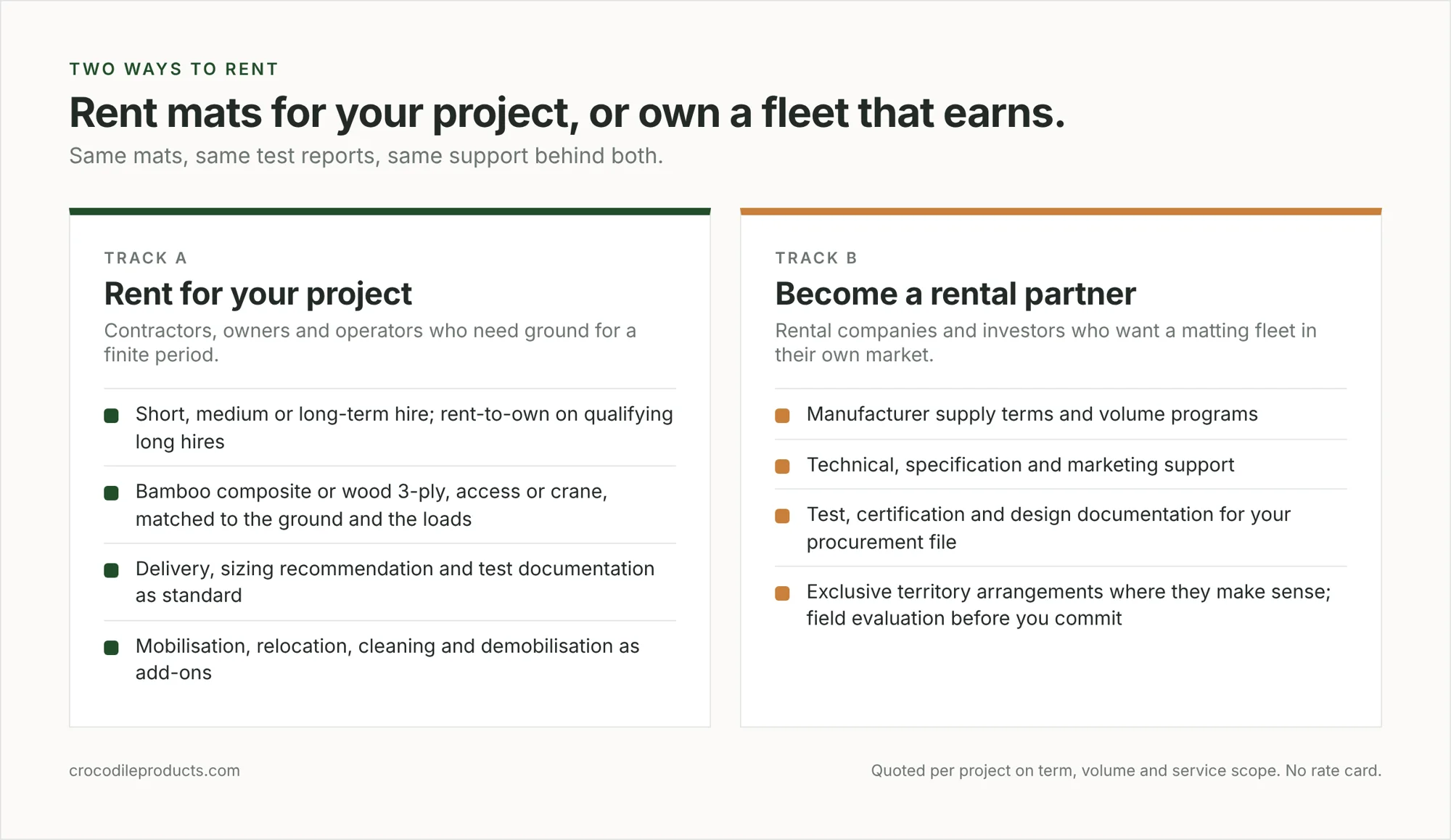
You tell us the job: the ground, the loads, the kilometres or the lift. We size it, recommend the mat and the quantity, and quote a term. Short, medium or long hire; add mats as a phase grows, hand them back as it shrinks. Rent-to-own is available on qualifying long-term hires.
What you get as standard is the same product we sell, with the same test reports behind it: delivery to your site or hub, a documented sizing recommendation, and the certification paperwork on request. Mobilisation, relocation between locations, cleaning between deployments and demobilisation are available as add-ons, either from us or from vetted local contractors we coordinate.
Who this suits: pipeline and civil contractors, drilling and workover programs, transmission and utility builds, wind and solar sites, temporary works. Anything that needs a working platform for a finite period and a clean exit at the end.
Where the bamboo mat changes the arithmetic
Rental is a logistics business wearing a product's clothes. The costs that decide whether a hire makes sense are trucks, moves, washes and returns. That is where the bamboo composite mat earns its place, and we can show the numbers rather than assert them.
Trucks
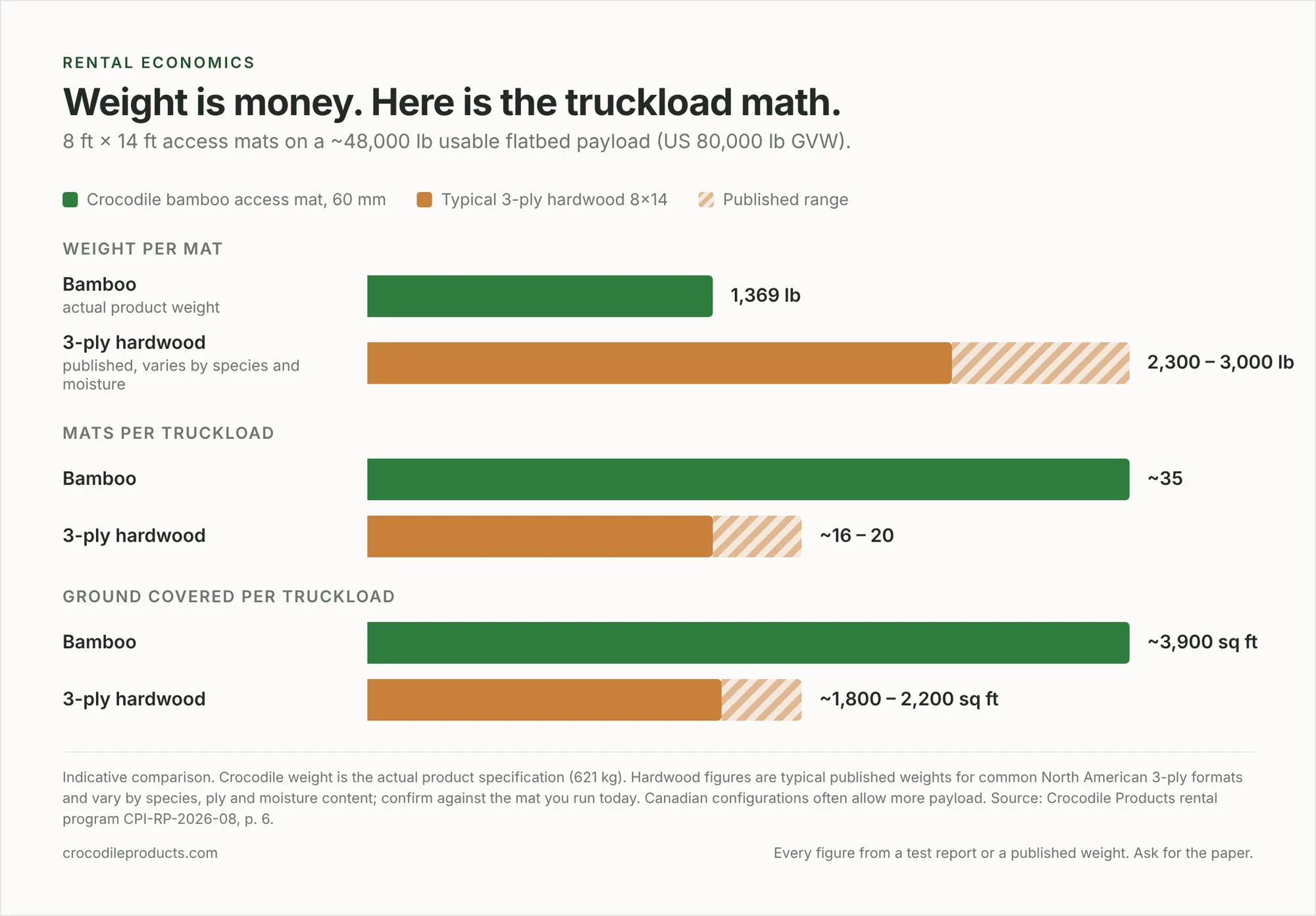
Our 8 x 14 bamboo access mat weighs about 1,370 lb. Published weights for a typical 3-ply hardwood 8 x 14 run 2,300 to 3,000 lb. On a 48,000 lb payload that is roughly 35 bamboo mats against 16 to 20 hardwood, or about 3,900 square feet of road per truck against 1,800 to 2,200. Every relocation on a moving spread is paid for by the load.
Water
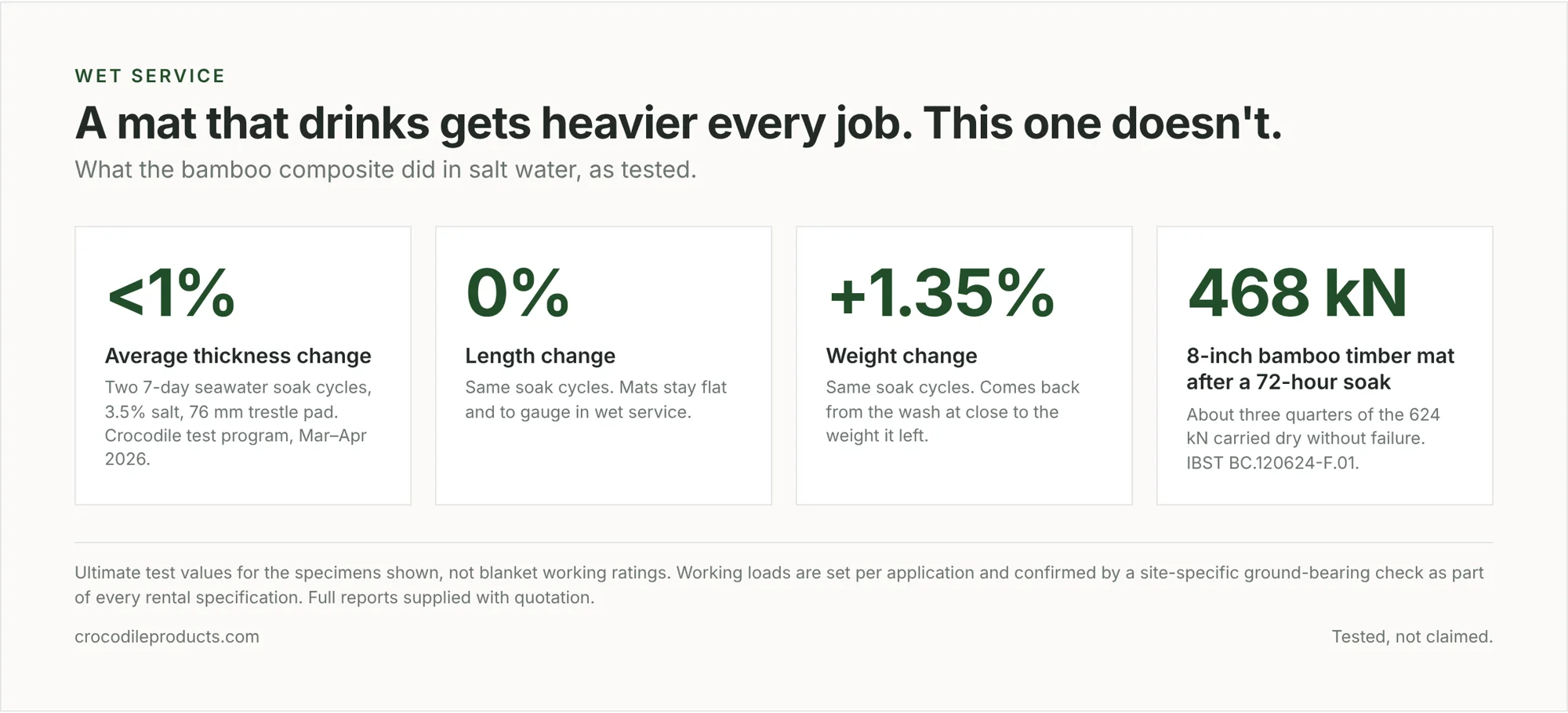
A mat that drinks is a mat that gets heavier every job and splits when it freezes. The bamboo composite is denser than water and takes very little on: our sea-water soak tests in 2026 showed under 1% thickness change over two seven-day cycles, and the 8-inch bamboo timber mat tested at 468 kN after a 72-hour soak, about three quarters of its dry figure. The practical effect for a rental fleet is a mat that comes back from the wash at close to the weight it left.
Consistency
A rental fleet is graded on return. With hardwood, grading is judgement: this board is split, that one is soft. With a factory-laminated mat every unit in the stack is the same unit, which makes inspection fast and makes a fleet of five hundred behave like one mat.
What we do not claim is a service life. We do not yet have enough years of rental return data on bamboo to put a number on it, and we would rather tell you that than invent one. The water and weight figures are tested; the life figure will come from fleets in the field, including the one described next.
What a rental fleet found in the field
A national equipment rental company in the United States has been field-testing our bamboo mats on live jobs over recent months before committing to a fleet. One of those jobs is worth describing, because it was a direct side-by-side under identical conditions.
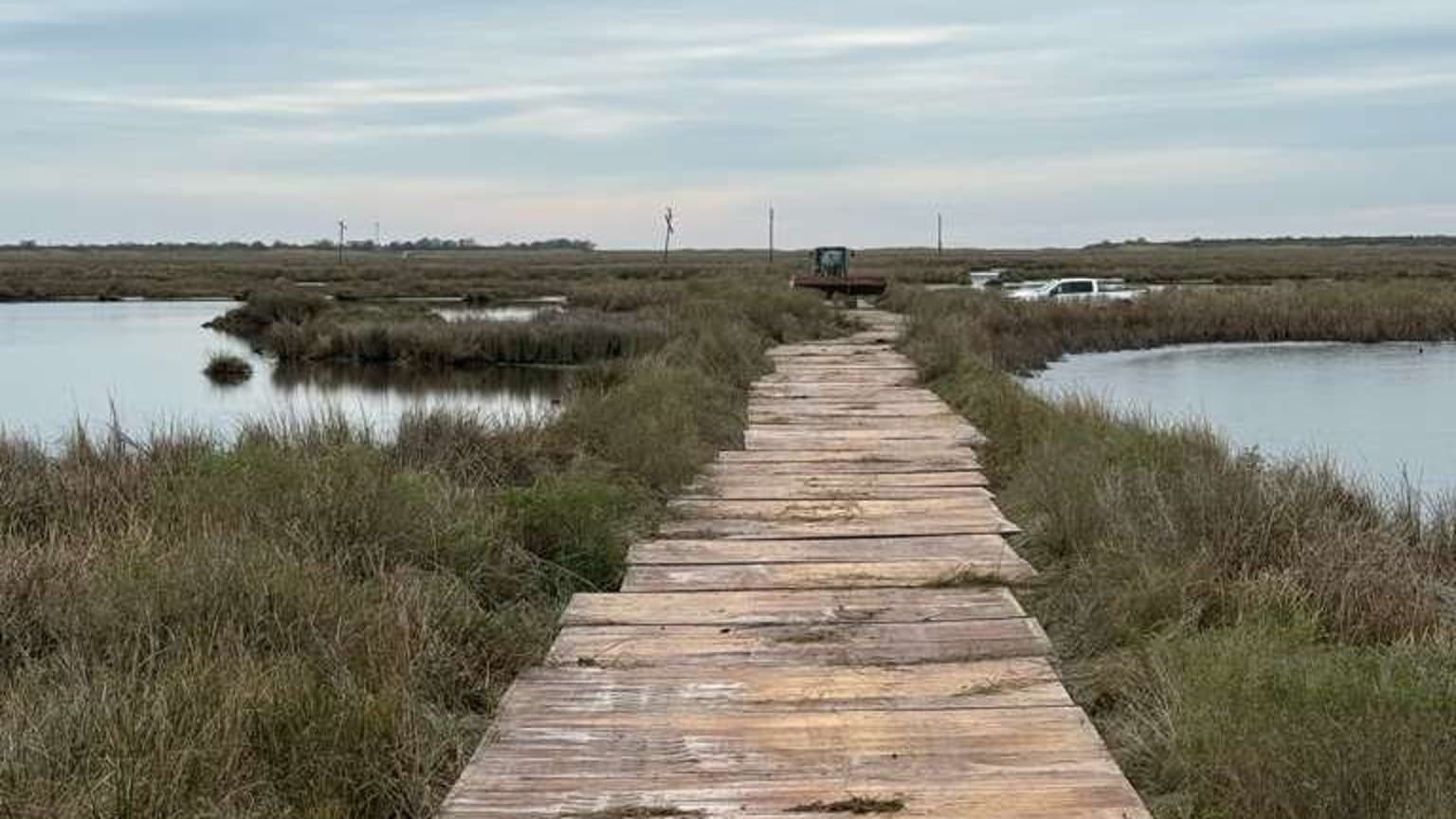
A one-month hire supported pad construction and roadway access at a wildlife refuge, with heavy equipment and loaded dump trucks running continuously over soft, saturated marsh ground. The rental company's crews installed 384 of their own 8 x 16 three-ply timber mats and 107 of our bamboo mats, then documented what came back.
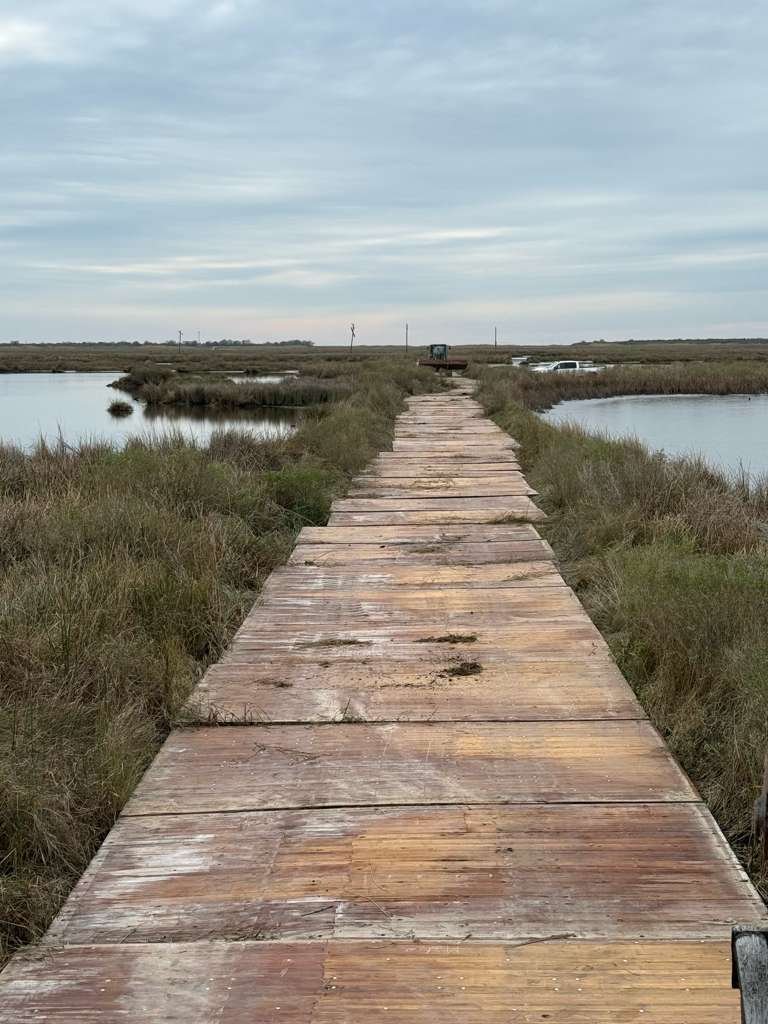
Bamboo access mats across saturated marsh ground on the field evaluation, January 2026.
Of the 384 timber mats, 27 came back completely damaged, 19 slightly damaged and 14 heavily caked and needing cleaning: 60 mats, or about 15.6%, with issues after a single month. Of the 107 bamboo mats, none failed structurally. The damage recorded was minor fork marks from loading and placement and some limited fraying. In the rental company's own words, the bamboo mats "performed effectively in marshy conditions and maintained structural integrity throughout the project."
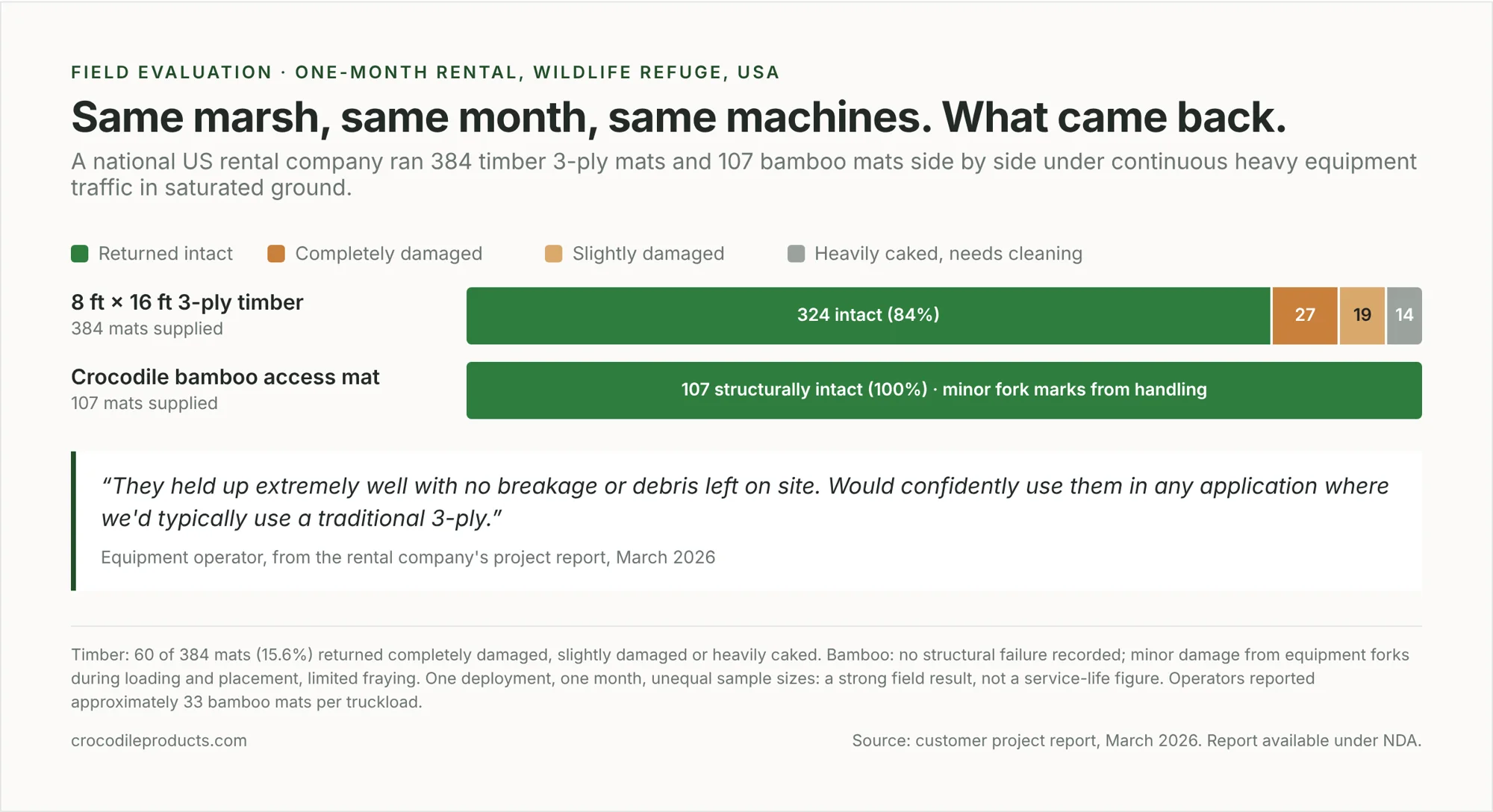
The operator comments are the part we would have paid for and could not have written: the mats "held up extremely well with no breakage or debris left on site"; crews "would confidently use them in any application where we'd typically use a traditional 3-ply"; and "one of the biggest advantages was being able to get approximately 33 per load, which is a significant pricing advantage relative to freight."
Two honest caveats. This is one deployment of one month with unequal sample sizes, so it is a strong field result, not a service-life figure. And the trucking count the operators observed, about 33 per load, is the number to plan with; our calculated 35 assumes a full legal payload and a perfect stack. That is the right way to buy a rental asset, and it is the way we would rather sell one: test it, count what comes back, then decide.
When wood is the right rental
For a good deal of Western Canadian pipeline work the right mat is still a 3-ply wood access mat, because that is what the spreads run on and what the yards know. We rent those too: kiln-dried, consistent build, and tested as a finished mat (our 8 x 14 wood access mat held 58.2 kN in three-point bending over an 11-foot span at IBST in February 2026). Renting from us is not a bamboo-only conversation. It is a which-mat-for-this-ground conversation.
Track B: own a fleet that earns
Rental companies and investors can buy a fleet from us and rent it into their own markets, with manufacturer supply terms, volume programs, technical and specification support, marketing material, and exclusive territory arrangements where they make sense.
The business case for a rental partner is the same arithmetic as above, seen from the other side of the invoice: more mats per inbound container, fewer trucks per relocation, faster wash and grade, and a product with test reports a procurement team can file. We share a project-specific commercial model with qualified partners under NDA, and we would rather you ran a field evaluation first than bought on a brochure.
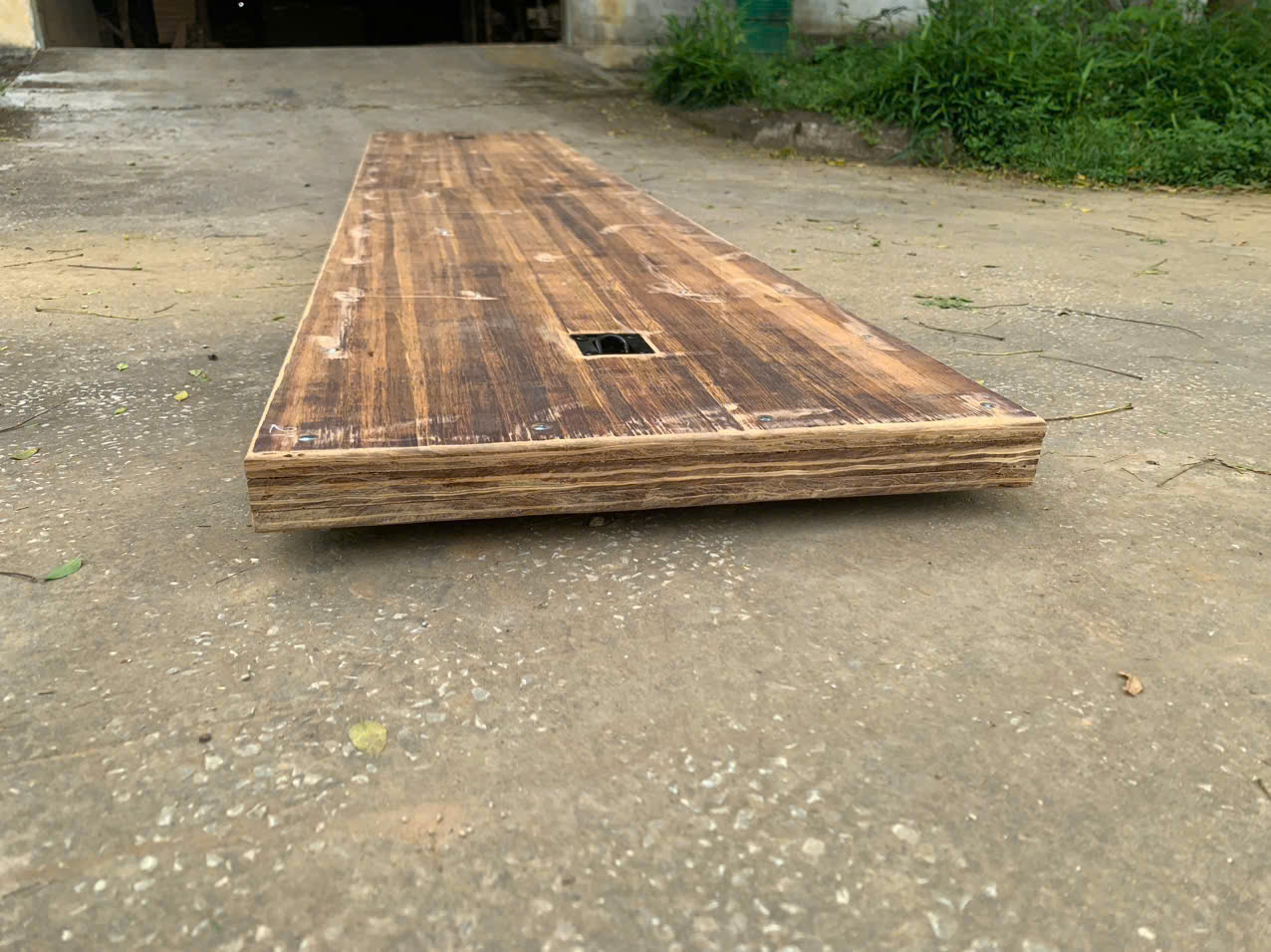
A finished bamboo access mat: one laminated composite slab through its full thickness, with a recessed lifting point.
How a hire moves
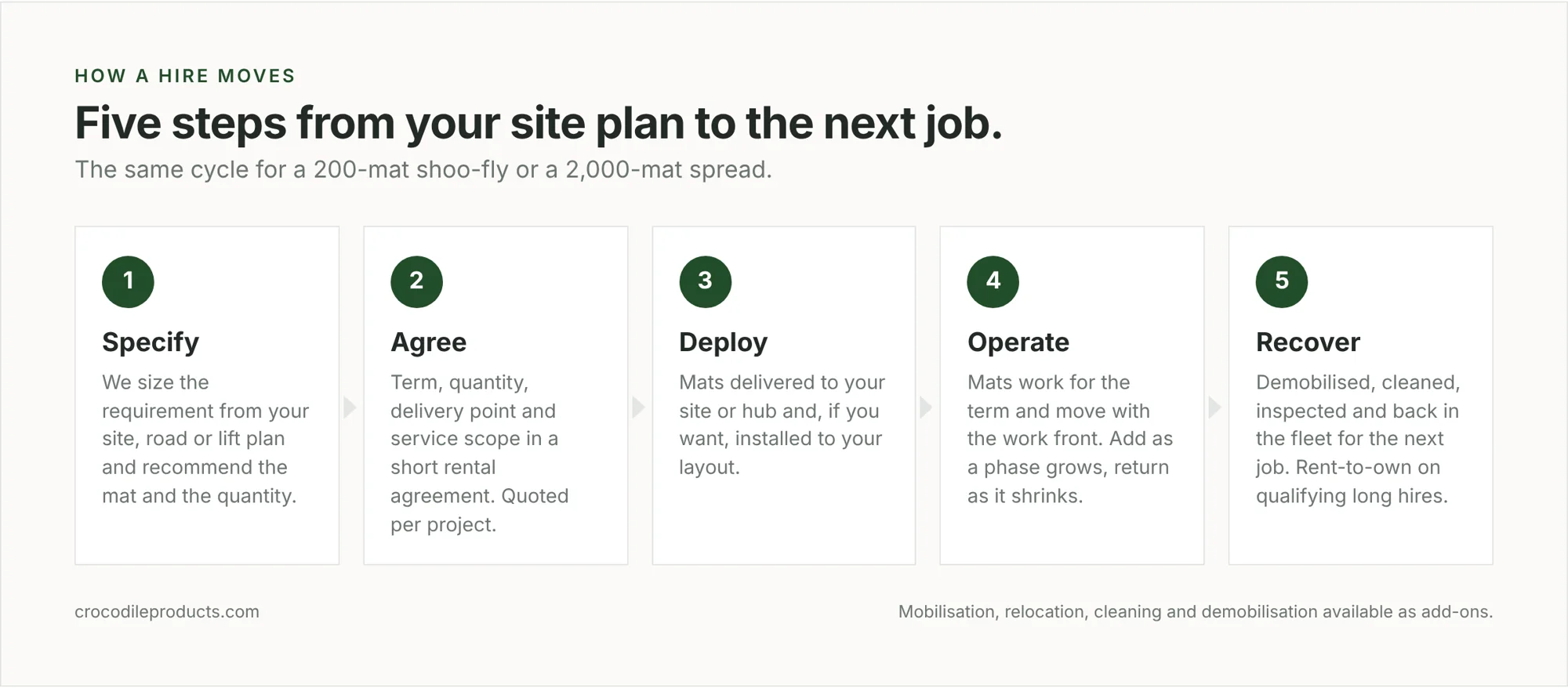
Specify. We size the requirement from your site, road or lift plan.
Agree. Term, quantity, delivery point and service scope in a short rental agreement.
Deploy. Mats delivered and, if you want, installed to your layout.
Operate. Mats work for the term and move with the work front.
Recover. Demobilised, cleaned, inspected and back in the fleet for the next job.
Getting started
Tell us the ground, the loads and the dates. We will come back with a recommended mat, a quantity and a quote for the term. Rental is quoted per project on term, volume and service scope; there is no rate card, because no two spreads are the same.
Every figure in this article is from a test report, a published weight or a customer's written project report. Ask for the paper. Load results are ultimate test values for the specimens shown, not blanket working ratings; working loads are set per application and confirmed by a site-specific ground-bearing check as part of every rental specification. Hardwood weights are typical published figures and vary by species, ply and moisture content.