
Renewable
Wind & Renewable Energy Access
Renewable sites put the heaviest lifts on the most sensitive ground, and the environmental case for the project makes the ground impact of building it harder to justify away.
What this application demands
Turbine erection lifts
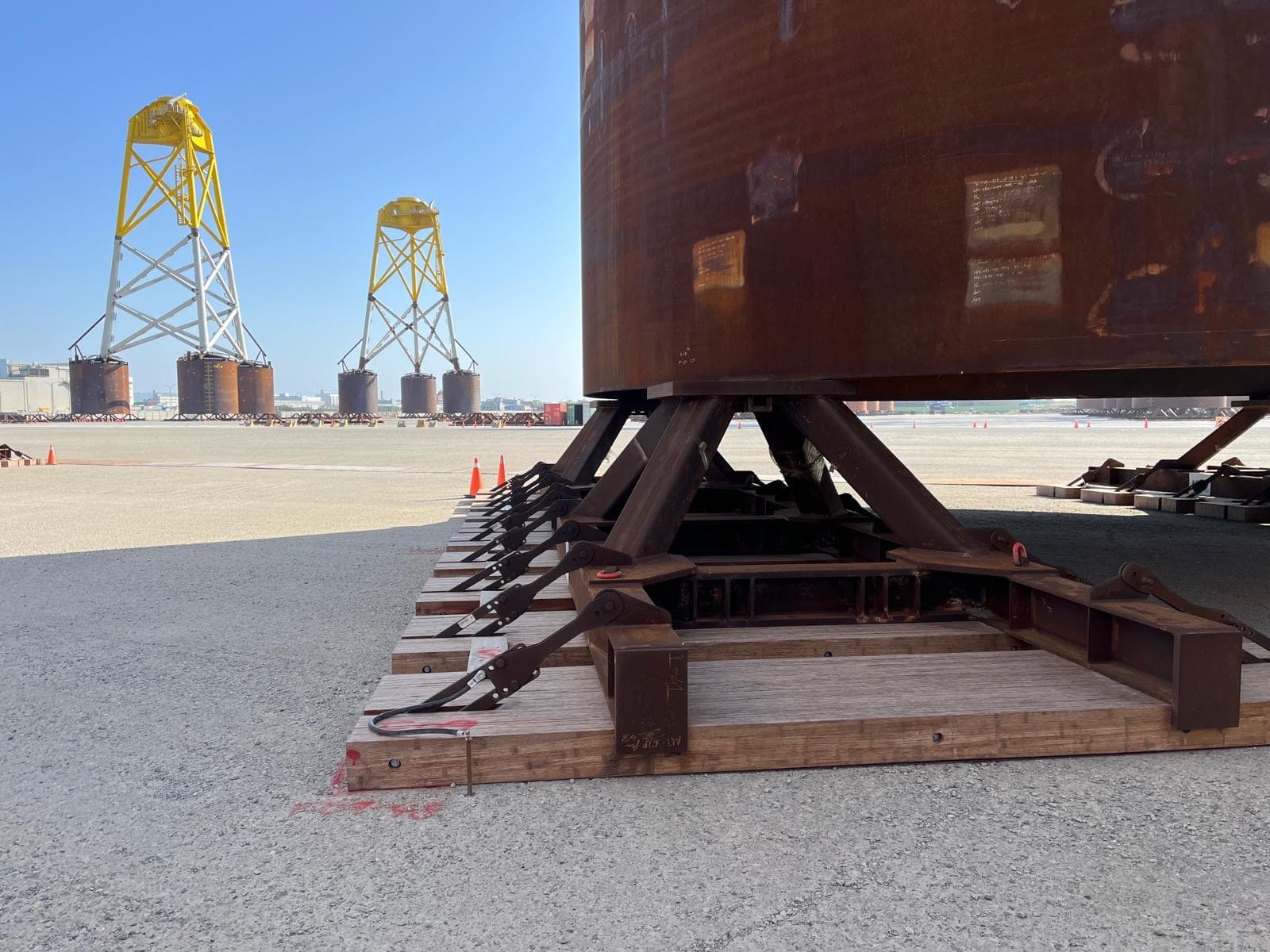
Turbine assembly needs a level, stable crane pad that holds through the lift. Pad sizing comes from outrigger load and ground bearing pressure, the same calculation as any heavy lift, at larger numbers.
Low-impact access
Bamboo is harvested on a 4 to 5 year cycle against 50 years or more for the tropical hardwoods used in matting, several of which are listed as Vulnerable on the IUCN Red List, which matters when the project is itself an environmental case.
Mats used for renewable work
Bamboo Crane Mats
A crane mat is a heavy load-distribution platform placed under a crane, its outriggers or its tracks, to spread a concentrated point load across enough ground area that the machine stays level and stable.
View rangeBamboo Access Mats
An access mat is a portable platform laid over soft or unstable ground to create a temporary road or work surface for heavy equipment, then lifted and reused elsewhere.
View rangeBamboo Road Mats
A road mat is a long-format ground protection panel laid end to end to build a temporary haul road across ground that cannot carry repeated vehicle traffic.
View range
Where we have done this
Common questions
What matting is used for wind turbine installation?
Crane mats form the pad under the erection crane and its outriggers, while access and road mats build the haul route capable of carrying blade and tower components to each position.